

Trade Idea: Sell VIX October 19 put / Buy VIX November 19 put via a 1x1 Put Calendar Spread
Trade Structure – Sell VIX October 19 puts and use the upfront premium to fund VIX November 19 puts, targeting a flat-premium 1x1 put calendar spread
Premium – Approximately flat premium
Indicative pricing (as of 20 August 2026) – UXV6 = 19.47, UXX6 = 20.13; 19-strike put calendar for flat premium
- The October put captures the period immediately before the election, when uncertainty and demand for volatility protection are expected to remain elevated. The November put extends beyond the 3 November election, providing exposure to the anticipated post-election decline in volatility.
- At the current indicative levels, the structure can be established for approximately zero upfront premium, with the November leg carrying roughly +4% beta-unadjusted delta.
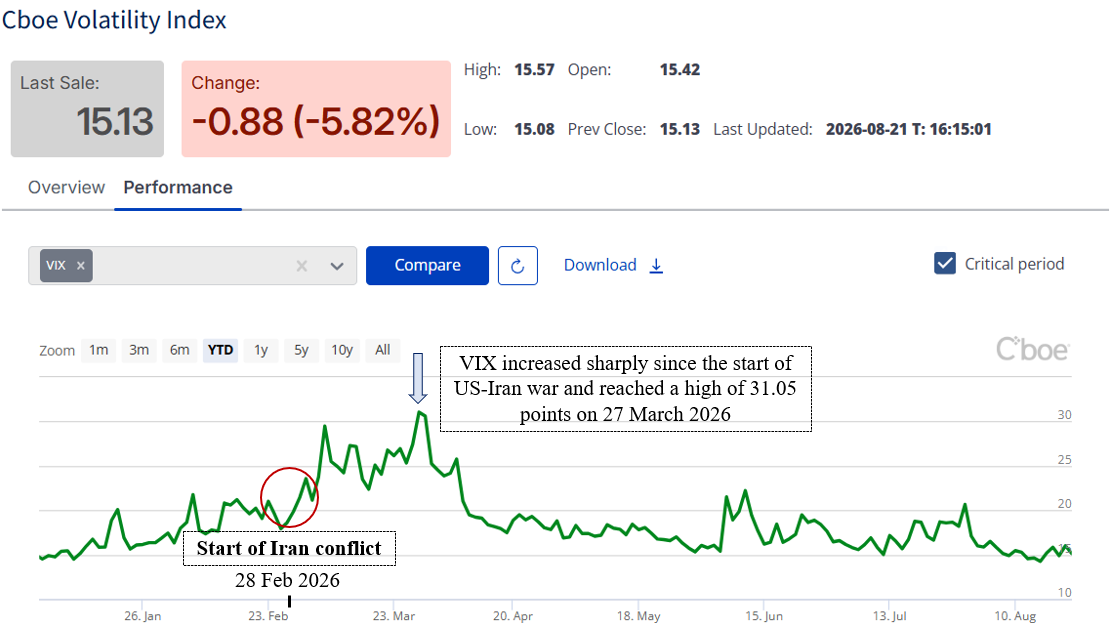
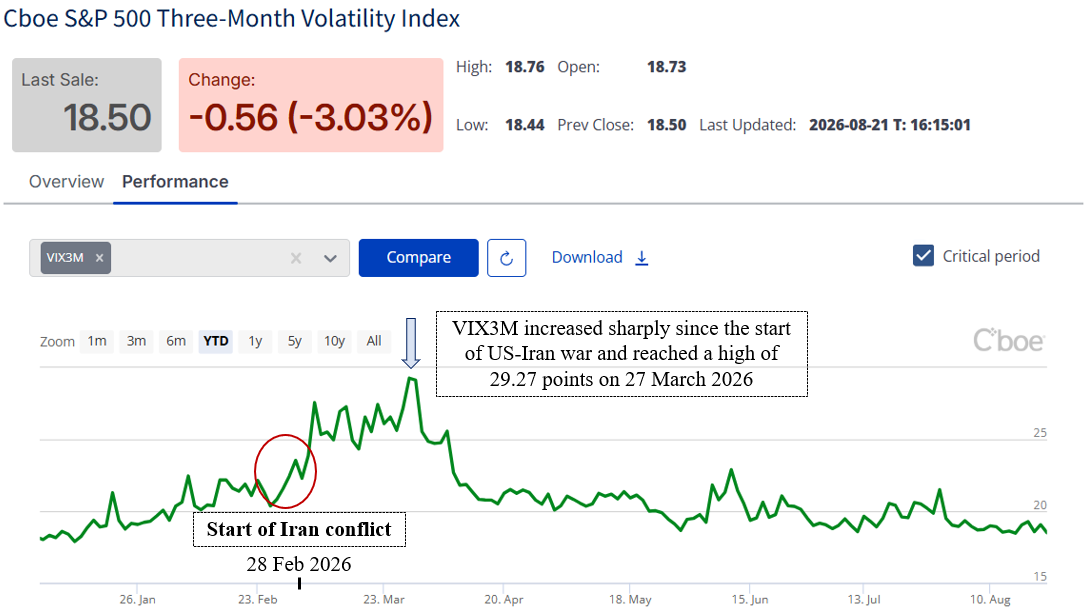
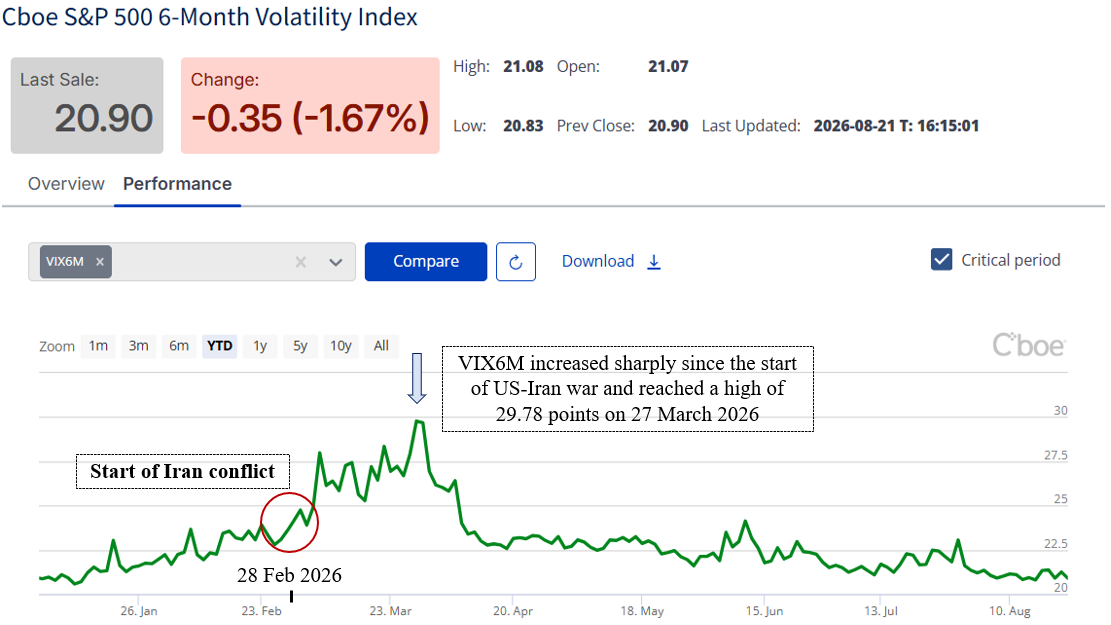
Source: https://www.cboe.com/us/indices/dashboard/VIX-VIX1Y-VIX3M-VIX6M-VIX9D/
Investment Thesis
The 2026 US mid-term elections, set for 3 November, will determine control of Congress and key state offices, serving as a major referendum on the sitting presidential administration. The upcoming elections represent one of the two key event risks currently being priced into US equities, alongside the Federal Reserve's September FOMC meeting, which could signal the future trajectory of interest rate cuts and broader monetary policy.
Historically, mid-term election years have tended to come with lower average returns and higher realized volatility than non-mid-term years. One clean way to look at this could be through the four-year presidential cycle by its quarters.
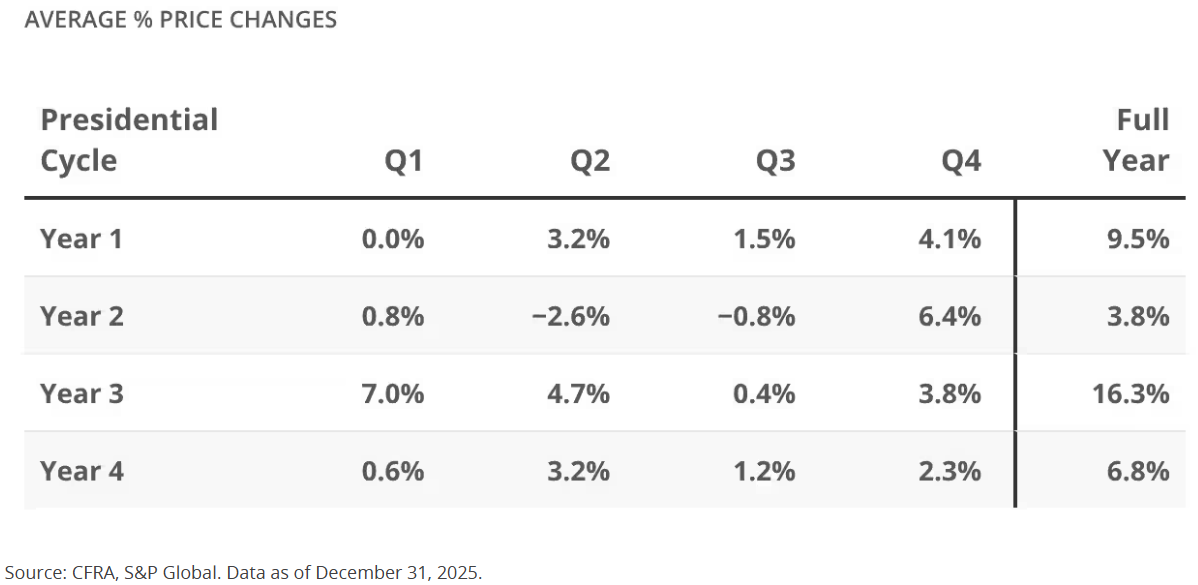
The SPX 1-day implied move around both events is approximately 90bps, suggesting that investors are assigning a meaningful premium to the two near-term event risks. Historically, mid-term election risk tends to become increasingly reflected in option markets around 3-4 months ahead of the election, which is broadly consistent with the current timing. With the market now entering this window, further election-related volatility premium could remain elevated or increase as investors approach the 3 November event.
However, the key opportunity is the expected normalization in volatility after the election. Historically, volatility has tended to compress following US mid-term elections as a major source of uncertainty from the political event is removed. The calendar spread therefore seeks to capture a widening and subsequent reversal in the VIX term structure rather than taking an outright directional view on the S&P500.
Key Rationales
This trade is effectively positioned for election-related volatility to remain elevated into 3 November but subsequently compress.
(1) Election risk is increasingly being priced in: Mid-term election risk typically starts entering option markets several months before the election, making the current period consistent with the historical pricing window.
(2) Potential for further near-term volatility premium to increase: As 3 November approaches, uncertainty around Congressional control and the resulting policy implications could keep demand for short-dated volatility elevated. The 2026 mid-term elections come at a deeply polarized moment, and headlines are likely to intensify as the election approaches. Current political uncertainty is particularly relevant given that the election will determine the balance of power in Congress for the remainder of President Trump's term.
(3) Post-election volatility compression: Once the election outcome is known, a significant component of the event premium should decay. This creates a relative-value opportunity to own volatility exposure further out while financing it by selling nearer-dated volatility.
(4) Favourable carry profile: By entering the calendar for approximately flat premium, the trade does not require a significant upfront cash outlay. The investor is effectively exchanging near-term October downside-volatility exposure for November exposure that spans the election and its aftermath.
Payoffs
The trade is most attractive if VIX remains relatively supported into the October expiry but subsequently declines following the election.
- Pre-election – VIX remains elevated → October put expires OTM with limited value / is sold at relatively rich implied volatility
- Post-election – Event risk disappears → VIX declines → November 19 put retains value as volatility normalises toward the strike
Key Risks
Conversely, the trade would be vulnerable if volatility falls sharply before October expiry, as the short October put would benefit less from elevated volatility while the November put could also lose value. Another key risk would be a large post-election volatility spike. If the election produces a contested or unexpectedly disruptive outcome, the expected volatility compression may fail to materialise.
(1) Volatility compresses too early: The market could price out election risk before October expiry should there be greater certainty of the election outcome going into 3 November, reducing the value of the calendar
(2) Election outcome triggers further uncertainty: A close, contested or lingering unexpected result could cause VIX to remain elevated or even rise after 3 November
(3) VIX term structure moves adversely: The trade depends not simply on the level of VIX but on the relative pricing of October versus November volatility; the trade is not just a bet that VIX will fall; it is also a bet that the relationship between October and November VIX futures will compress
(4) Other macro events dominate: September FOMC, inflation data, geopolitical developments or changes in Fed expectations could overwhelm the election-related volatility signal
Bottom Line
The put calendar spread expresses the view that mid-term election risk should keep volatility supported into the event, while the resolution of the election should allow volatility to compress thereafter. It therefore offers a relatively capital-efficient way to position for a post-election normalisation in volatility without taking an outright directional position on US equities.


